How RMP Global Reduced EPD Costs with a Flexible LCA Model
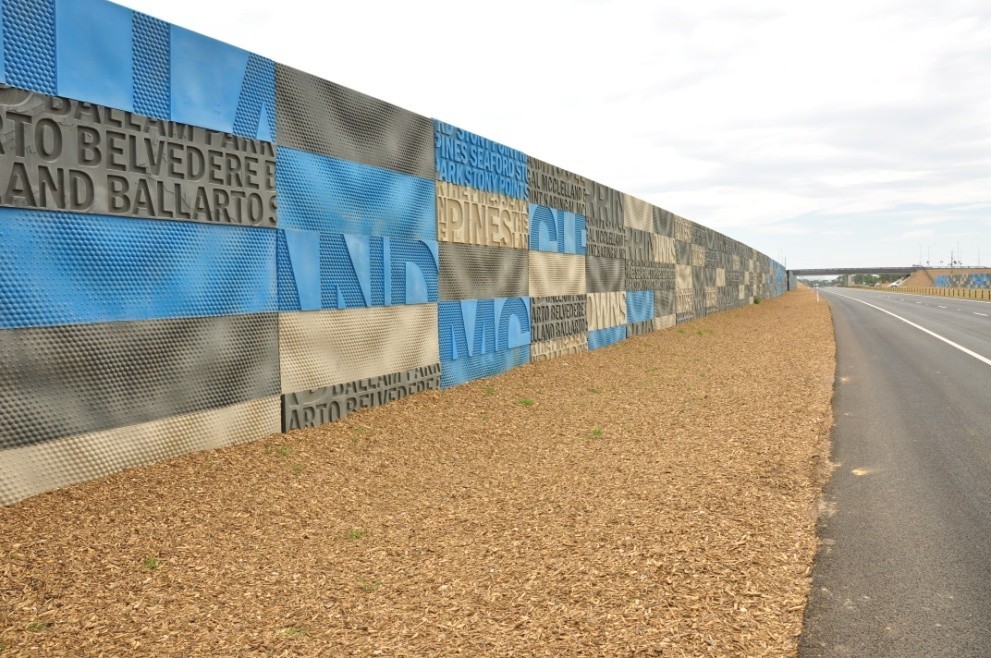

"We don't want to move with everyone else. We want to lead everyone else."
— Priscila Carrijo, Business Development Manager, RMP Global
Company | RMP Global transforms post-industrial plastic waste into high-performance noise wall systems, serving transportation, data center, and infrastructure markets across North America, Australia, and Europe. |
|---|---|
Challenge | Architects would not specify RMP's products without a verified EPD. Off-the-shelf EPD solutions were unworkable for a company that ships customized walls across North America. |
Solution | CarbonGraph built a flexible LCA model for the RenewWall™ system in 20% of the time compared to legacy software. RMP can now update project-specific variables without rebuilding the study, reducing the long-term cost of maintaining environmental documentation. |
Results | RMP Global is now using its published EPD to compete for sustainability-driven projects, including a recent LEED-focused project where the RenewWall™ is both cost competitive and aligned with the project's sustainability goals. |
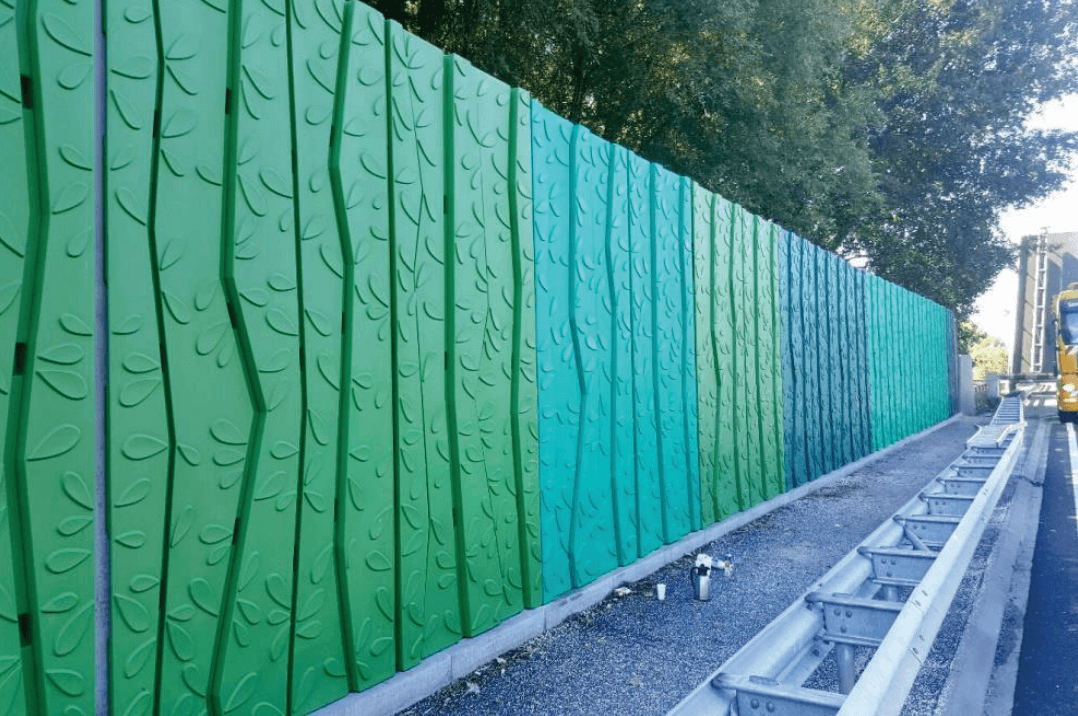
The RenewWall uses recycled plastic panels to reduce impact and cost compared to traditional noise wall systems.
20 Years Of Turning Waste Into Infrastructure
RMP Global takes post-industrial plastic waste that would otherwise end up in landfills and turns it into durable, high-performance noise wall systems erected beside highways, data centers, and other infrastructure projects across North America. Their RenewWall™ system is made from 100% recycled linear low-density polyethylene (LLDPE) plastic, and is modular and configurable to meet the needs of a specific project. The panels are UV-resistant, graffiti-resistant, maintenance-free, and can be recycled or disassembled at end-of-life for reuse elsewhere. The company's mission: prove that recycled, low-carbon solutions can deliver value, durability, and resilience without compromise.
Just Saying You're Sustainable Isn't Enough
When Priscila Carrijo, RMP Global's Business Development Manager, started reaching out to architects and engineers across North America, she knew the product had a compelling story to tell. Recycled plastic panels, easy installation, and non-toxic materials had seemingly clear benefits in a construction project. But the response from specifiers kept coming back to the same question: "Do you have an EPD?"
"I approached one architectural firm and their question was, 'You have an EPD?' I said no. They said, 'We don't even want to talk to you before you get your EPD. Go get your EPD, then come back.'"
— Priscila Carrijo, Business Development Manager, RMP Global
Across North America, architects, structural engineers, and large tech tenants like Meta are treating the EPD not as a bonus but as a baseline. For RMP, getting there required a different kind of solution. Because the RenewWall adapts to different project conditions, a static one-size EPD simply didn't fit how RMP operates.
One Model, Built To Flex
Where competitors offered static, one-time reports, CarbonGraph builds a living LCA model. That distinction matters enormously for a company like RMP, whose product variables shift from project to project: section width, transport distance, wall configuration. With a living model, RMP can update any of those parameters and calculate project-specific environmental impacts without starting over. That flexibility does more than save time, it reduces the cost of maintaining environmental documentation across custom projects. Instead of commissioning a new study for every configuration change, RMP can reuse a verified baseline model and respond to bids far more efficiently.
"CarbonGraph offered us a quick and easy solution that we can tailor according to the project. That's what we needed."
— Priscila Carrijo, Business Development Manager, RMP Global
The published EPD covers the RenewWall™ Noise Wall System from cradle to gate through end-of-life (A1–A3, A4, A5, C1–C4), independently verified against ISO 14025 and ISO 21930. The declared unit, one square meter of noise wall, carries a GWP-total of 25.6 kg CO2e for production stages and 60.9 kg CO2e cradle-to-grave. Built into the model are scaling factors that translate section width into adjusted impact figures, giving RMP a credible, verifiable number for any configuration they bid.
From Sustainability Stories to Sales Wins
Having a published EPD changes how RMP Global competes in the market across every customer conversation they have:
Architects & Specifiers: RMP can now go back to every architect who previously turned them away. The EPD satisfies sustainability requirements that previously blocked specification.
Data Center Clients: Major tech tenants such as Meta, Microsoft, and Amazon increasingly require EPDs for construction materials at their facilities. RMP is now positioned to compete in that growing segment.
Competitive Differentiation: With a published GWP figure for the RenewWall™ system, RMP can now make a verifiable embodied carbon claim against competing solutions.
Internal Improvements: The living LCA model will be handed over to RMP's team for self-service use, allowing them to update project-specific parameters as operations expand.
This shift is already translating into real project wins. On a recent LEED-focused project, an architect specified RenewWall™ because it was both cost competitive and supported the project's LEED goals. For RMP, the EPD is now actively influencing specification decisions.
Perhaps most importantly, the EPD gives substance to something RMP has always believed about its products but could never fully quantify: that recycled, low-carbon solutions can deliver value, durability, and resilience without compromise. Now they have the numbers to prove it.
Leading as Sustainability Standards Rise
Carrijo and Talbott see the EPD as the foundation of a longer market argument. The sustainability mandate from major data center developers isn't softening, it's accelerating. "Everyone has sustainability as top of mind, and things are just getting more strict," Carrijo said. Having a living, updatable LCA model in hand before that wave fully arrives puts RMP ahead of the curve.
"By having an EPD, we can prove this is a low-carbon, sustainable product. We can show that our stuff is actually superior to non-sustainable solutions in every way."
— Doug Talbott, President, RMP Global
For RMP, the EPD is more than a specification requirement cleared. It's proof of a thesis they've been building for two decades: that the infrastructure industry doesn't have to choose between performance and sustainability. With the model live, the numbers verified, and their team trained to update it project by project, they're not waiting for the market to catch up. They're showing the way.
See RMP Global's EPD on SmartEPD, and learn more about their products at https://rmpglobal.com/.