Community Models: Good Medicine in LCA
Author:
Andrew Sheahan

Community Models: Good Medicine for LCA
Recently, I was working on an LCA for a luer lock syringe. Things were moving along, but I kept thinking: someone has probably already done something very close to this.
I had recently read a publicly available study by Matthew Eckelman and Robert Litan. I reviewed their inventory and results—but it didn’t occur to me to actually recreate their model until I was already deep into building my own.
That’s when it clicked.
If an expert-built model were available in a reusable, editable format, it wouldn’t just save time—it would fundamentally change how LCAs get done.
From Static Studies to Living Models
So I decided to try it.
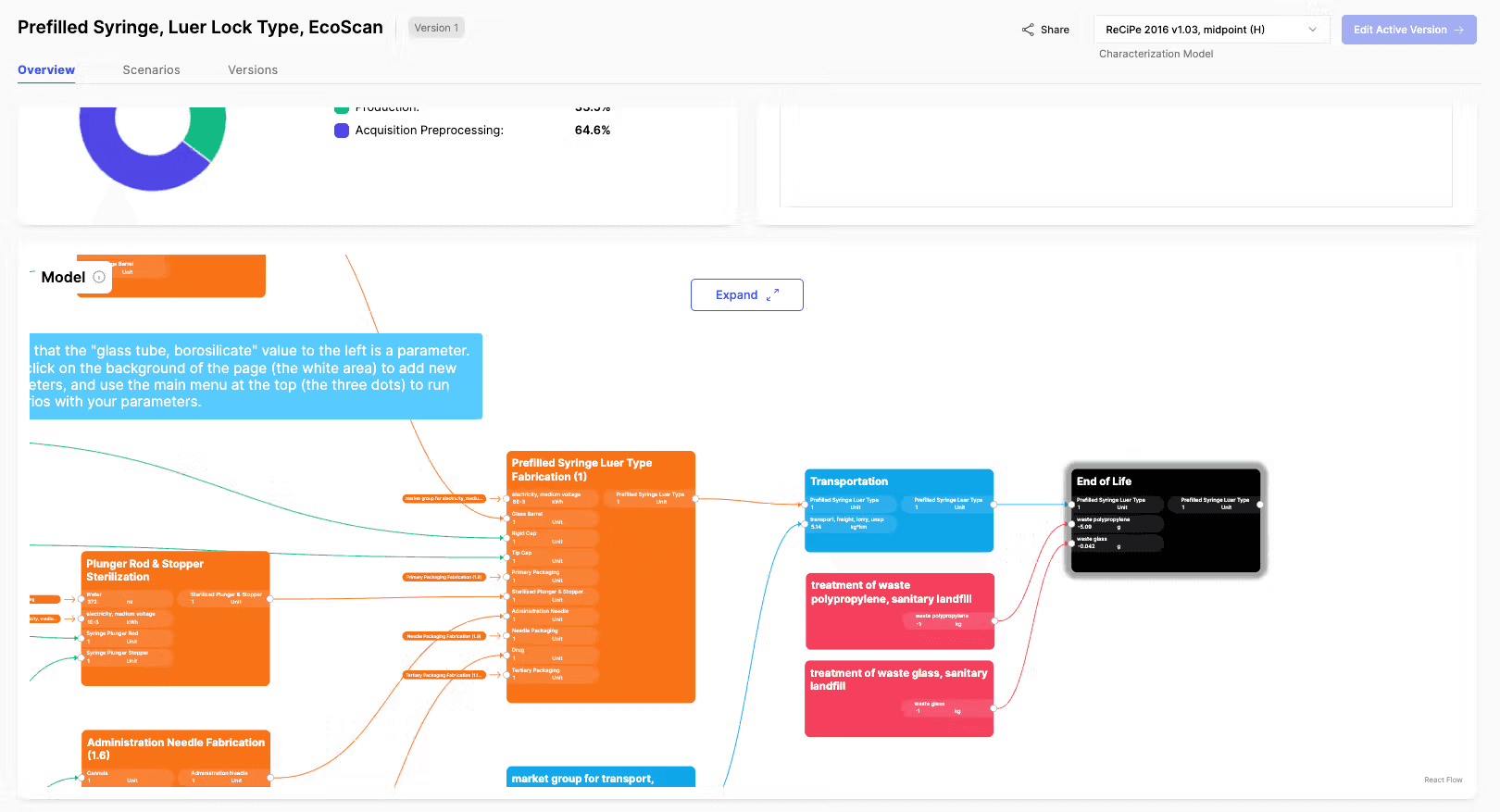
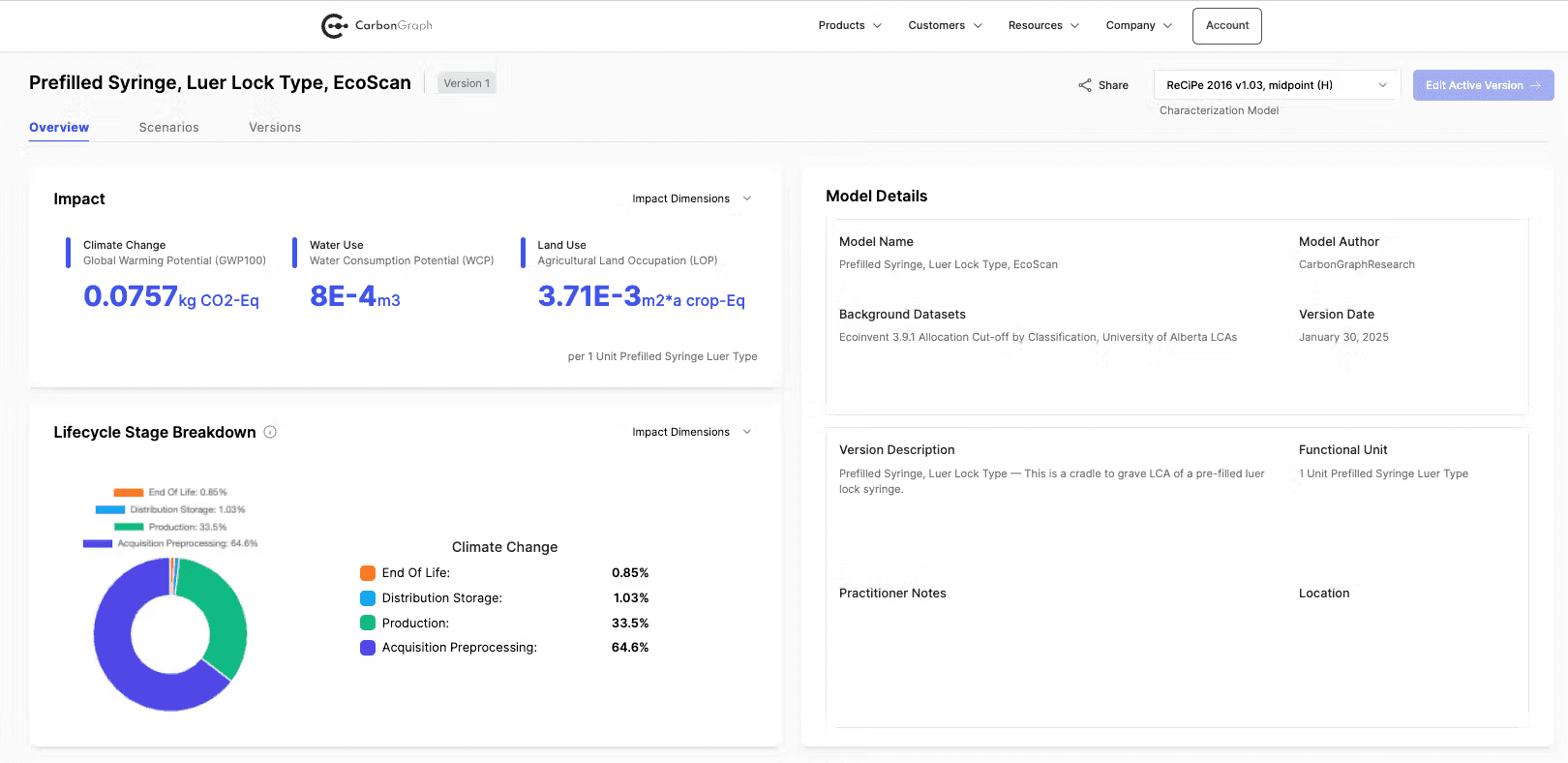
I took the inventory from the published study and rebuilt it in EcoScan. The initial result was… messy. (That part was on the tool, not the authors.) But within a few minutes, I had cleaned it up into a working model and started exploring results.
That experience highlights a broader shift:
Recreating LCAs doesn’t have to be a slog anymore.
Traditionally, this process:
Takes hours (or days) of manual setup
Requires access to specialized software
Involves a lot of guesswork translating static reports into models
With the right tooling, a published inventory can become a working model in minutes.
Why Community Models Matter
This is where the idea of community models becomes powerful.
Instead of publishing LCAs as static PDFs, what if we shared:
The full model
The assumptions
The structure behind the results
Not just what the answer is—but how we got there.
LCA has long struggled with a “black box” perception. Even when methods are transparent, most practitioners only ever see the final results. That makes it hard to:
Validate assumptions
Learn from other practitioners
Build on existing work
Community models flip that dynamic. They make LCAs:
Auditable — you can trace every assumption
Reusable — adapt a model instead of rebuilding from scratch
Collaborative — others can improve or challenge your work
And that’s a big deal.
Faster Iteration, Better Decisions
Once a model is live, the benefits compound quickly.
You can:
Run scenario analyses without rebuilding the model
Test design changes (materials, processes, geography)
Ask others: what am I missing?
Instead of one-off studies, you get something closer to a shared, evolving system of knowledge.
For sectors like healthcare—where this syringe example comes from—that matters. Design and procurement decisions have real environmental consequences, and better tools mean faster, more informed decisions.
Not Perfect—But Moving in the Right Direction
To be clear, this approach isn’t flawless.
Rebuilding the study surfaced quirks:
Extra transport assumptions
Some messy structuring from the import process
General cleanup work
But that’s part of the point.
When models are shared, these issues don’t stay hidden—they get improved. The quality of models increases because they’re exposed to the community.
A Shift in How LCA Gets Done
There’s a clear trend in LCA tools today:
Faster workflows
More flexibility
Less reliance on opaque systems
Community models fit directly into that shift.
They don’t replace rigor—they amplify it by making assumptions visible and reusable.
The model is the model. If you want others to see it, challenge it, or build on it—you can.
Try It Yourself
If this resonates, you can explore the exact model described here:
And if you have thoughts, improvements, or critiques—share them. That’s the whole point.
What This Enables
We’re also starting to layer in:
Interactive dashboards
Easier scenario comparison
Better ways to explore model outputs
The goal is simple:
make high-quality LCA faster, more transparent, and more collaborative.